Guide
How to Choose a Management Framework
Most framework choices are made by familiarity or fashion. Here is a procedure for making them by fit instead.
Choose by problem class, not by framework popularity. Diagnose, decide, execute and measure are four different jobs, and a framework built for one will disappoint at another.
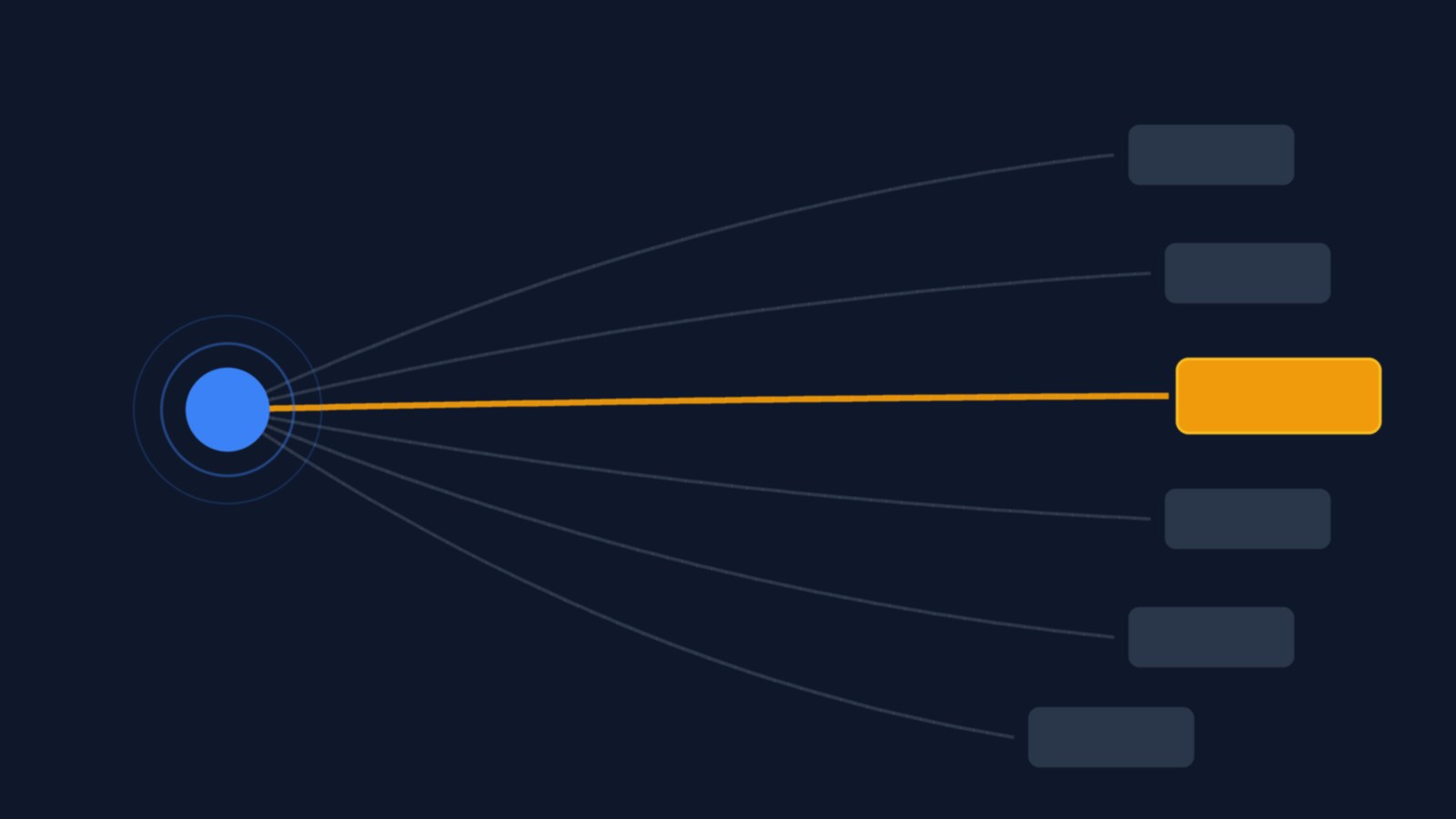
The selection problem
Ask a room of managers which framework to use for a stalled product launch and you will get answers drawn almost entirely from what each person learned most recently. The consultant proposes the tool from their last engagement. The MBA proposes the one from their strategy module. The engineer proposes the one their previous team ran. None of these is a bad instinct, but none of them is selection — it is recall.
The cost is real. A framework applied to the wrong class of problem does not simply underperform; it produces confident, well-structured output that points in the wrong direction. A SWOT Analysis run on an execution problem will produce four tidy quadrants and no reason why the work is late. The tidiness is the danger.
What follows is a procedure. It will not tell you which framework to use — that depends on your situation, which is the point — but it will narrow eighty candidates to two or three in about ten minutes.
Step 1: Classify the problem, not the symptom
Almost every framework belongs to one of four jobs. Getting this classification right eliminates most of the field immediately.
- Diagnose — you do not yet understand what is happening. Value Stream Mapping, Process Mining, Porter's Five Forces, PESTEL Analysis.
- Decide — you understand the situation and must choose between options. VRIO, Ansoff Matrix, RICE, MoSCoW, Capital Budgeting.
- Execute — the decision is made and the work needs to happen. Kanban, Scrum, Gantt Charts, RACI, Kotter's 8-Step.
- Measure — the work is happening and you need to know whether it is working. KPIs, Balanced Scorecard, Net Promoter Score, Variance Analysis.
The trap is classifying by symptom. "Our launches are always late" feels like an execution problem, so teams reach for a scheduling tool. But if launches are late because three departments each believe they own the decision, that is a governance problem and a Gantt chart will only document the delay more precisely. Ask what you would need to learn before the problem could be solved. If the answer is "nothing, we just need to do it," you have an execution problem. If you cannot answer, you have a diagnostic one.
Step 2: Name the decision the output will inform
This is the question that kills the most framework proposals, and it should be asked before any workshop is scheduled: what decision will be made differently depending on what this produces?
If there is no such decision, you are producing a document, not an analysis. This is the single most common reason framework outputs sit unused — not that the framework was wrong, but that nothing downstream was waiting for it. A PESTEL commissioned because the planning template has a section for it will be completed, filed and never consulted.
Naming the decision also determines the required precision. If the decision is "which of these three markets do we enter," you need a framework that discriminates between options. If it is "should we be worried about regulation," a broad scan is enough.
Step 3: Check the evidence you actually have
Frameworks vary enormously in what they demand as input, and this is where selection most often goes wrong in practice. RICE requires reach and impact estimates; without them it manufactures precision from guesswork and produces a ranked list whose order is essentially arbitrary. The Kano Model requires genuine customer survey data. Benchmarking requires comparable external data you can actually obtain.
Be honest here rather than aspirational. A framework you can run properly with the evidence you have beats a more sophisticated one you will run on assumptions. If you have no data, a simple Priority Matrix run by people who know the domain will outperform a quantitative model fed with invented numbers — and it will be visibly less certain, which is a feature.
Step 4: Match the time horizon
A framework's cycle time must fit the decision's deadline. This sounds obvious and is routinely ignored.
Scenario Planning is a months-long exercise. Design Thinking runs in weeks. MoSCoW takes an afternoon. Running a deep framework against a short deadline produces a rushed version that carries the authority of the method without the rigour — arguably worse than an honest quick decision, because it is harder to challenge.
If the deadline genuinely does not permit the appropriate framework, the correct response is to make an explicit provisional decision and schedule the proper analysis, not to compress the framework.
Step 5: Check organisational readiness
Some frameworks require conditions the organisation may not have. OKRs require leadership willing to set targets that will sometimes be missed; in a culture that punishes misses, they degrade into sandbagged task lists within two cycles. Kanban's WIP limits require managers who will tolerate visible idle time. Psychological safety work requires leaders prepared to hear things they will not enjoy.
This is not an argument against ambitious frameworks. It is an argument for predicting the failure mode before adopting one, because a framework that fails on its cultural prerequisite tends to discredit the underlying idea for years afterwards.
Common selection errors
- Choosing by seniority of endorsement. That a framework is used by a company you admire says little about whether it fits your problem, and nothing about whether it fits your evidence.
- Choosing the most sophisticated available. Complexity is a cost. It buys discrimination between close options; if your options are not close, you are paying for nothing.
- Choosing one framework for everything. Organisations that standardise on a single framework end up classifying every problem as the type that framework solves.
- Choosing before defining the problem. If the framework is selected first, the problem gets reshaped to fit it.
- Choosing to avoid a decision. Commissioning analysis is a legitimate way to defer, and everyone in the room usually knows when that is what is happening.
When the answer is no framework
Frameworks earn their cost when a problem is complex enough that unaided judgement misses things, or contested enough that a shared structure helps people disagree productively. Neither condition is always present.
If the decision is reversible and cheap, make it and observe the result — the experiment is faster and more informative than the analysis. If one person holds all the relevant knowledge and authority, a framework mostly adds ceremony. If the real obstacle is that nobody wants to say the uncomfortable thing, no framework will surface it; that is a psychological safety problem wearing an analysis costume.
The mark of good framework selection is not how often you use one. It is whether the ones you use change what you do.
Frequently Asked Questions
How do I choose the right management framework?
Start by classifying the problem rather than searching for a framework. Decide whether you need to diagnose a situation you do not understand, decide between known options, execute a decision already made, or measure whether something is working. Each job has a distinct set of frameworks, and this classification eliminates most candidates immediately. Then name the specific decision the output will inform, check whether you have the evidence the framework requires, and confirm its cycle time fits your deadline.
What is the most common mistake when selecting a framework?
Choosing the framework before defining the problem. When the tool is selected first, the problem gets reshaped to fit it — an execution delay gets analysed as a strategy question because a strategy framework was already on the agenda. The second most common mistake is running a framework that requires data you do not have, which produces confident output built on invented numbers.
Should we standardise on one framework across the organisation?
Standardising on a single framework has a real cost: teams begin classifying every problem as the type that framework solves. A common vocabulary is valuable, but it is better achieved by standardising the way problems are classified than by mandating one tool. Most organisations are better served by a small approved set covering diagnosis, decision, execution and measurement.
How many frameworks should we use at once?
Usually one primary framework per problem, sometimes two when a diagnostic feeds a decision. Beyond that, the coordination overhead exceeds the analytical benefit, and outputs start contradicting each other in ways nobody has time to reconcile.
When is it better not to use a framework at all?
When the decision is cheap and reversible, running the experiment beats analysing it. When a single person holds all the relevant knowledge and authority, a framework mostly adds ceremony. And when the real obstacle is that nobody is willing to say something uncomfortable, no framework will surface it.
Related guides
- Why Management Frameworks FailFrameworks rarely fail because the framework is wrong. They fail in a small number of recurring, predictable…
- How Management Frameworks CombineThe question is rarely which framework to use. It is which framework to use first, and what its output…
- Strategy vs Execution FrameworksTwo different jobs, two different families of tools, and a well-documented gap between them where most…